2026-10-21 · Mike Ellison
Jacksonville Hurricane Debris Dumpster Guide
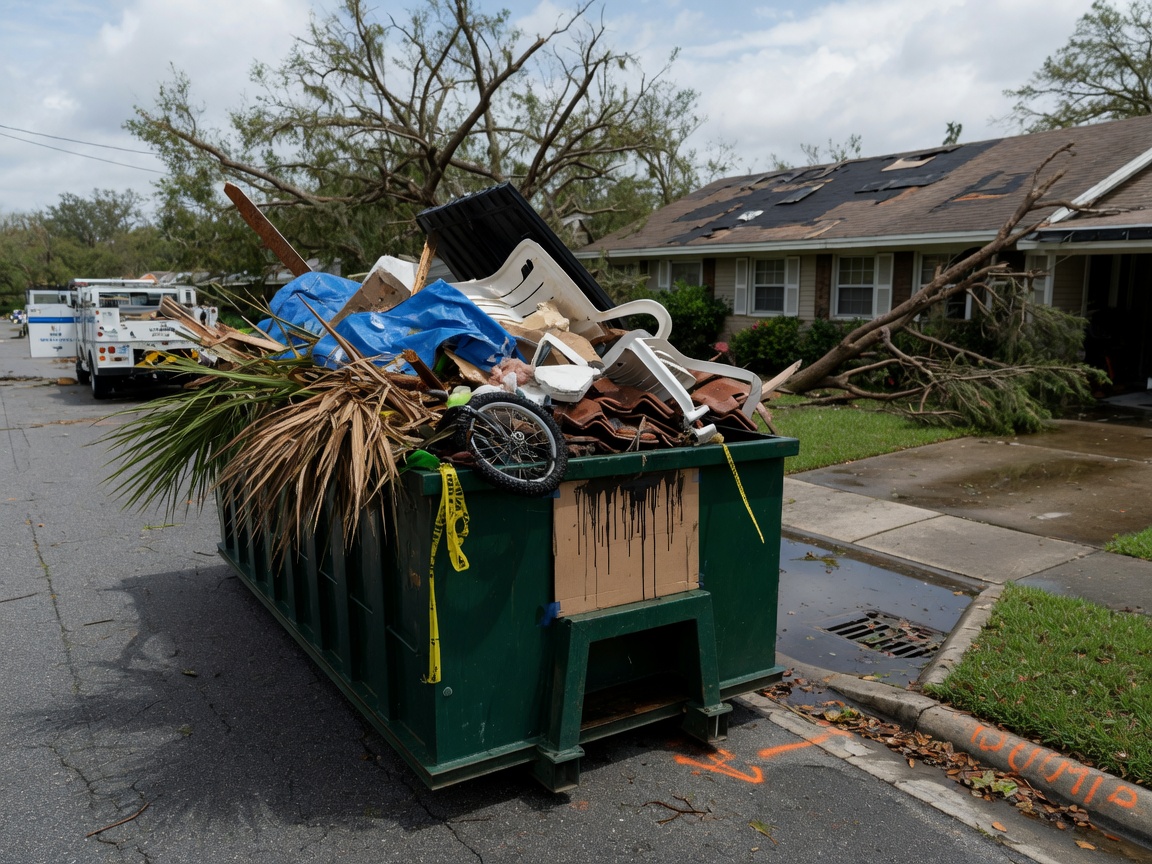
In Jacksonville a 20-yard or 30-yard roll-off works for most single-home hurricane debris loads after storms pass through Duval County. These containers fit typical post-storm volumes of tree limbs, roof shingles, and water-damaged furniture from older homes in Riverside or San Marco without exceeding weight limits on local roads.
Choosing the Right Dumpster Size for Hurricane Debris
Hurricane season brings heavy rain and wind that strips trees and damages roofs across neighborhoods like Avondale and Springfield. A 10-yard unit suits light yard waste from smaller lots in Mandarin, while 20-yard and 30-yard options handle mixed debris from larger properties near the St. Johns River. Residents in Arlington often need the extra capacity because older housing stock produces more bulky items such as saturated drywall and broken fencing. Overloading risks extra fees, so crews measure loads by the cubic yard before pickup. Weather patterns matter too: humid subtropical conditions mean debris stays wet longer, increasing weight and requiring careful distribution inside the container to avoid tipping during transport.
Permit Rules and Placement on Jacksonville Streets
Duval County requires permits when dumpsters sit on public right-of-way after major storms. Homeowners in Downtown Jacksonville or near EverBank Field must check city rules before delivery because narrow streets and high foot traffic limit options. Placing the unit on a driveway works best in Riverside and Springfield where lots allow 10 to 12 feet of clearance. Drivers avoid soft soil near the St. Johns River to prevent sinking during the wet season. Check the full permit details in the Dumpster Rental Permit Rules in Jacksonville FL before scheduling. Nearby cities such as Atlantic Beach and Neptune Beach follow similar county guidelines but add extra rules for beachfront properties.
Handling Common Hurricane Debris Types in Duval County
Storms drop large volumes of vegetative debris along with construction waste in areas like Mandarin and Arlington. Tree limbs and palm fronds make up the bulk of loads from older homes in Avondale, while roof materials dominate after wind events near the Cummer Museum district. Wet debris from flooding along the St. Johns River adds weight, so crews spread loads evenly and avoid mixing hazardous items. Residents should separate metal and concrete when possible to keep costs down. Residential Dumpster Rental covers these mixed loads for single-family homes throughout the county.
Timing Your Rental Around Jacksonville Weather Patterns
Mild winters give way to hot, humid summers that fuel hurricane activity from June through November. After a storm, book early because demand spikes in neighborhoods like San Marco and Downtown Jacksonville. Same-day delivery works when roads stay clear, but flooding near Kingsley Plantation or low-lying parts of Springfield can delay trucks. Plan for 7 to 14 days of rental time to sort and load debris before pickup. Mild winter temperatures reduce rain delays compared with summer storms, yet crews still watch for afternoon thunderstorms common in the region.
Local Tips for Efficient Cleanup in Jacksonville Neighborhoods
Start with a walk-through of your property to list debris types before the container arrives. In Orange Park and Atlantic Beach, narrow driveways require precise placement to avoid blocking neighbors. Use tarps to cover the load overnight against sudden rain that keeps humidity high. Coordinate with neighbors in Riverside for shared larger units when multiple homes need service. For sizing help on renovation debris mixed with storm damage, see the guide at How to Size a Dumpster for Jacksonville Home Renovations. Call 6115 Deepwood Dr W during Mon–Fri 8am–6pm or Sat 9am–2pm to confirm availability for your street.